The 4 Best Enterprise Imaging Platforms for Cloud-Based Medical Imaging Solutions
Many imaging teams still juggle separate viewers, PACS servers, and third-party sharing links because their current setup cannot connect across locations. That friction slows reading time and creates compliance gaps every time a study leaves one hospital network for another.
By the end of this article you will know the four concrete features that separate workable cloud platforms from the rest, the pricing structures each vendor actually offers, and why one of the four earns the top spot when measured against these requirements.
What to Look For in Enterprise Imaging Platforms for Cloud-Based Medical Imaging Solutions
Enterprise imaging platforms must deliver specific capabilities that directly address regulatory, technical, and operational demands of modern healthcare delivery.
Healthcare organizations should evaluate seven essential capabilities when selecting cloud-based medical imaging solutions. Each capability carries measurable benchmarks that affect patient care, compliance, and system performance. You can also explore Find Medical Coding and Billing Programs Near You for a closer comparison.
Regulatory compliance requires documented HIPAA and GDPR certification status. Organizations need current audit certificates and evidence of ongoing compliance monitoring rather than initial certification statements alone.
Technical standards compliance centers on DICOM conformance statements. These documents verify that platforms handle imaging data consistently across different modalities and vendor systems.
Storage capacity requirements include maximum supported study size. Large radiology studies from CT and MRI modalities can exceed several gigabytes each, requiring platforms to handle variable file sizes without performance degradation.
Access management specifications include concurrent user limits. Multi-site healthcare systems need platforms that support simultaneous access by radiologists, referring physicians, and administrative staff without system slowdowns.
Performance expectations include average retrieval latency under 2 seconds. Clinicians require rapid image access during diagnostic interpretation and patient consultations to maintain workflow efficiency.
Business continuity planning involves disaster recovery RPO and RTO targets. Recovery point objectives and recovery time objectives determine how quickly systems restore operations after technical failures or security incidents.
System integration capabilities require documented HL7 and FHIR integration endpoints. These standards enable seamless data exchange between enterprise imaging platforms and electronic medical records, laboratory systems, and other clinical applications.
1. Medicai - Best Overall
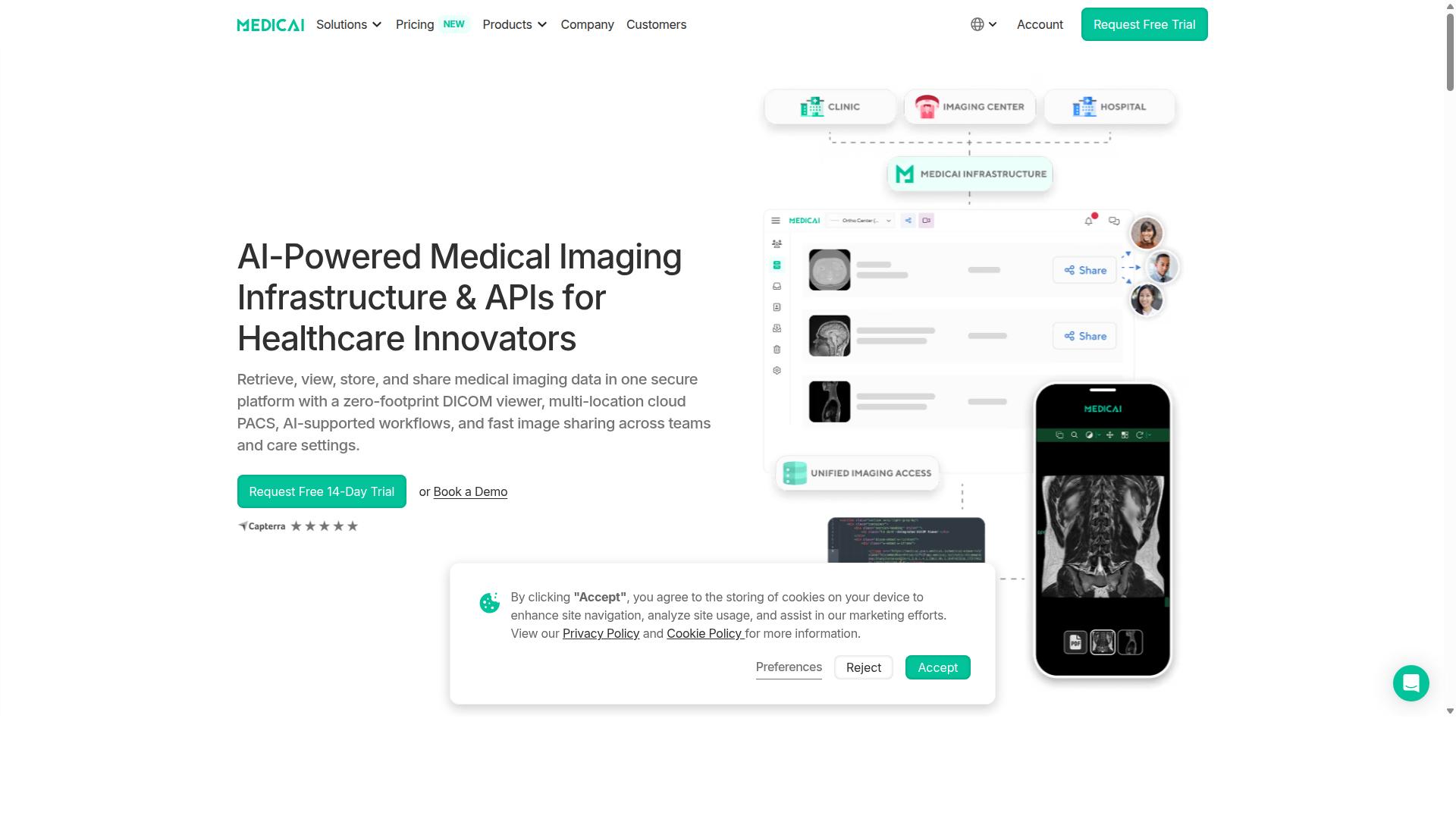
Medicai positions itself as the comprehensive cloud imaging solution that consolidates retrieval, storage, viewing, and exchange functions within a single HIPAA-compliant platform.
The platform delivers a zero-footprint DICOM viewer that requires no local software installation, making it suitable for multi-site healthcare networks where clinicians access studies from various locations and devices.
Cloud architecture eliminates on-premise server maintenance while supporting Imaging Infrastructure as a Service delivery across distributed care settings.
Healthcare organizations managing multiple facilities benefit from centralized image access without geographic restrictions on platform availability.
Core Capabilities and Compliance
Compliance documentation and technical certifications provide the foundation for vendor evaluation in regulated healthcare environments.
Medicai maintains HIPAA and GDPR compliance alongside FDA and CEE clearance for its viewers while following OWASP security guidelines throughout the platform development.
Production-scale reliability appears through 50 million yearly API transactions and over 300,000 DICOM visualizations processed in the last year alone.
The platform currently supports 70 clinics and hospitals with more than 10,000 active doctors accessing imaging data through its infrastructure.
Over 2 million imaging studies have been uploaded to the system, demonstrating capacity for enterprise-level medical imaging workflows across multiple care settings.
Pricing and Deployment Options
Transparent pricing tiers and deployment flexibility determine total cost of ownership for healthcare organizations evaluating cloud imaging platforms.
Monthly billing options include the Starter tier at $249 per month which provides 500 GB of cloud storage with unlimited user accounts but no connected locations included.
The Standard tier costs $749 per month and includes 2 TB of storage plus one connected location for organizations requiring direct facility integration.
Enterprise customers access custom pricing structures that accommodate multiple connected locations and external site connections based on specific organizational requirements.
Yearly billing provides 15 percent savings across available tiers, while a one-time $1,000 DICOM Gateway setup fee applies per location for organizations needing on-premise connectivity.
2. Intelerad

Intelerad offers radiology-focused imaging solutions with established market presence across hospital networks. The company provides enterprise imaging capabilities designed for healthcare organizations seeking cloud-based capabilities. Its services address the needs of multi-site facilities managing complex diagnostic imaging requirements.
Healthcare systems typically deploy these solutions when managing high volumes of medical imaging studies. The platform supports standard PACS deployments at enterprise scale. Organizations use Intelerad to handle radiology workflow demands across multiple locations and specialties.
Cloud imaging strategies allow facilities to reduce on-premise hardware investments. Image sharing becomes more efficient when data moves between authorized users without physical media transfer. Multi-site access improves when systems support remote viewing and collaboration tools.
Platform Strengths and Limitations
Platform evaluation requires balanced assessment of technical capabilities against implementation complexity and cost factors. Enterprise imaging decisions often hinge on deployment models. On-premise systems offer direct control while cloud options reduce infrastructure management overhead.
EMR integration presents ongoing challenges for most healthcare organizations. HL7 and FHIR standards help bridge systems but require careful configuration. Data security remains central to any deployment, with HIPAA compliance and encryption protocols forming baseline requirements.
Scalability limitations vary by infrastructure capacity and network bandwidth. Disaster recovery planning affects how facilities maintain continuity during outages. Role-based access and user authentication mechanisms help protect sensitive patient data while supporting legitimate clinical workflows.
3. Ambra Health
Ambra Health specializes in medical image exchange and cloud-based archive solutions for healthcare organizations. The platform supports radiology practices, hospitals, and research institutions that need secure storage and sharing across multiple locations. Its vendor neutral archive capabilities allow organizations to consolidate imaging data from different departments and modalities.
Cloud-based medical imaging platforms typically serve teleradiology workflows where radiologists interpret studies from remote locations. Multi-institutional sharing becomes essential when health systems need to coordinate care across affiliated hospitals and outpatient centers. These platforms handle both DICOM and non-DICOM files to accommodate various imaging modalities and document types.
Enterprise imaging solutions must connect with existing EMR systems to maintain clinical workflows. Organizations often deploy these platforms to support academic research initiatives that require image anonymization and data sharing capabilities. The architecture enables collaboration between different healthcare entities without requiring physical media transfer.
Platform Strengths and Limitations
Image exchange platforms must balance accessibility with security requirements across diverse healthcare network configurations. Bandwidth optimization techniques help reduce transfer times for large imaging studies, particularly in areas with limited network infrastructure. Cross-institutional access protocols ensure that authorized users can retrieve studies regardless of where the images originate.
Typical compression standards in clinical workflows include JPEG 2000 and wavelet compression methods that maintain diagnostic quality while reducing file sizes. These techniques allow faster transmission across wide area networks without compromising image resolution. Role-based access controls determine which users can view, annotate, or download specific studies.
Zero footprint viewers enable diagnostic interpretation through standard web browsers without requiring local software installation. This capability supports teleradiology workflows where radiologists need to access studies from home offices or multiple facilities. Data anonymization features help research organizations comply with privacy regulations when sharing images for clinical studies.
Multi-site access becomes critical when health systems operate across geographically dispersed locations with varying network capabilities. Load balancing distributes processing demands across servers to maintain consistent performance during peak usage periods. Disaster recovery capabilities protect against data loss through redundant cloud storage across different geographic regions.
4. UltraLinq
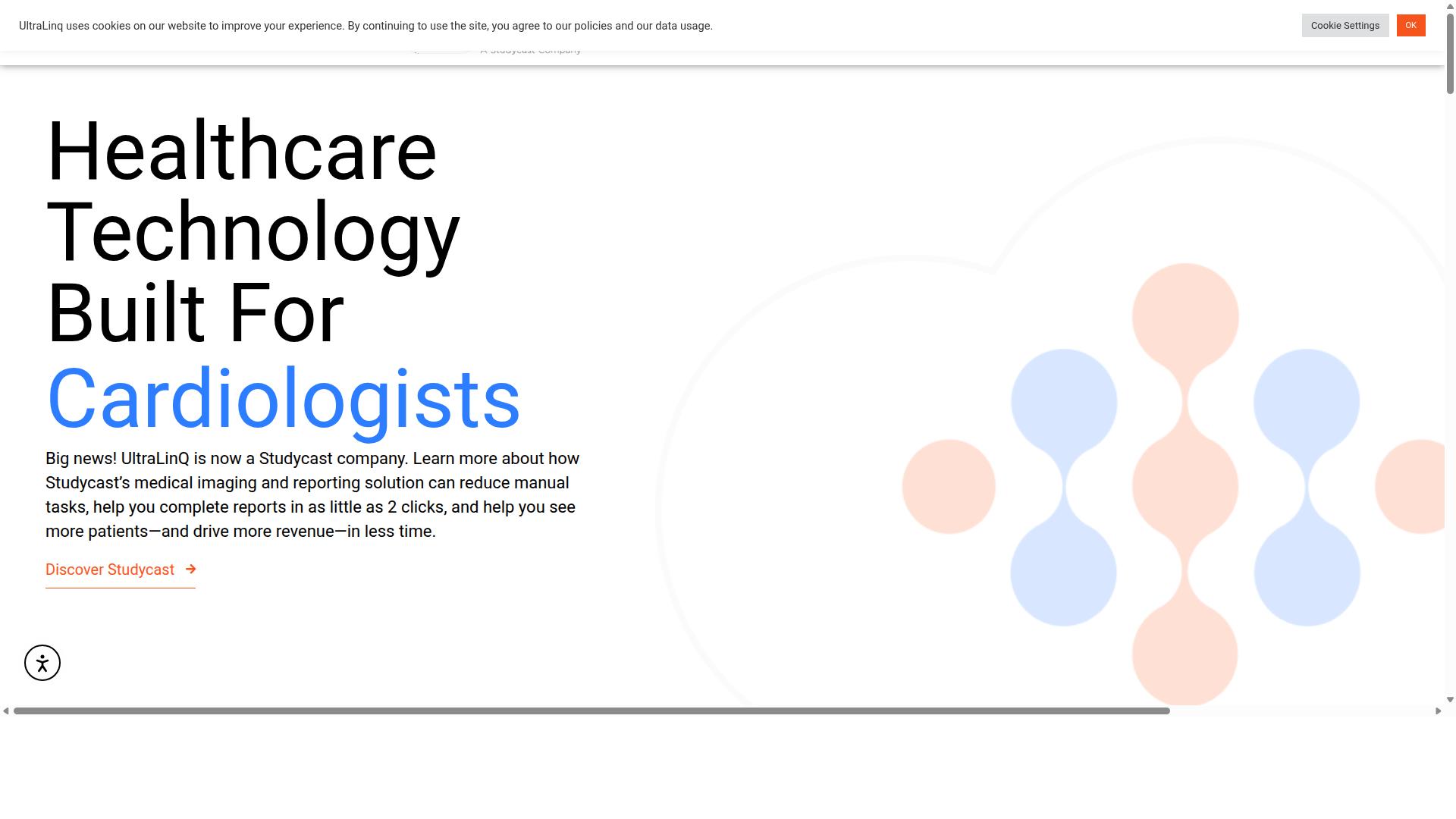
UltraLinq focuses on specialty-specific imaging solutions with emphasis on cardiology and diagnostic workflows. This approach addresses the distinct needs of cardiovascular departments and specialized clinics. The platform operates as a cloud-based system that supports remote access to patient reports and images from any internet-connected device.
Specialty imaging platforms typically connect with multiple diagnostic modalities including ultrasound systems, echocardiography equipment, and vascular imaging devices. These connections follow standard DICOM protocols to ensure consistent data transfer. Organizations often require seamless EMR integration to maintain complete patient records across different care settings.
Department-specific workflow requirements in cardiology include structured reporting, customizable worksheets, and post-processing analytics. Many facilities need mapped reporting capabilities that align with clinical documentation standards. Access controls typically incorporate multi-factor authentication and single sign-on configurations to meet enterprise security requirements.
Platform Strengths and Limitations
Specialty imaging platforms must accommodate unique workflow requirements while maintaining enterprise-grade reliability standards. Most deployments include role-based access controls that limit data visibility based on clinical roles. High availability configurations often feature load balancing and redundant storage across multiple geographic regions.
Integration patterns for diagnostic imaging modalities commonly follow established standards like HL7 messaging and DICOM protocols. These connections enable consistent data flow between imaging equipment and central archives. Many platforms support both local and remote modality connections to accommodate different facility types.
Typical access control implementations include user authentication systems that track individual activities through comprehensive audit trails. Data security measures usually involve encryption during transmission and storage. Multi-site access capabilities allow authorized users to review studies from different locations while maintaining compliance standards.
Standard high-availability configurations incorporate disaster recovery mechanisms and automated backup processes. These systems often include uptime SLAs that specify expected service levels. Cloud storage architectures provide scalability options that adjust based on institutional needs and regulatory requirements.
How to Choose the Right Option
Selection criteria must align platform capabilities with specific organizational requirements and regulatory obligations. Healthcare providers face different needs depending on whether they operate as hospitals, imaging centers, or specialty practices in fields such as orthopedics, neurology, oncology, radiology, and cardiology.
Multi-site access demands a cloud imaging solution that maintains performance across locations while meeting compliance mandates. Hospitals require enterprise imaging platforms that handle high imaging volumes with robust security protocols for sensitive patient data.
Imaging centers benefit from solutions that support rapid image sharing and teleradiology workflows. These facilities often need seamless integration with existing PACS and DICOM standards to maintain efficient operations.
Specialty practices in orthopedics, neurology, oncology, radiology, and cardiology each have unique diagnostic imaging requirements. Cardiology demands high-resolution cardiac imaging with precise measurement tools, while oncology requires consistent image access for tumor board discussions and treatment planning.
Compliance mandates such as HIPAA compliance drive platform selection across all provider segments. Enterprise imaging systems must provide encryption, audit trails, and role-based access controls to protect patient information during storage and transmission.
Interoperability becomes essential when platforms must connect with EMR systems through HL7 and FHIR standards. This connectivity ensures imaging data flows properly within broader healthcare workflows.
Scalability requirements differ between single-site imaging centers and multi-location hospital systems. Cloud storage solutions must accommodate growth in imaging volume without degrading performance or requiring infrastructure overhauls.
Vendor neutral archive capabilities allow organizations to maintain image access regardless of modality changes or vendor relationships. This independence protects long-term data accessibility and reduces vendor lock-in risks.
Final Verdict
Platform selection ultimately depends on demonstrated production performance, compliance documentation, and alignment with specific clinical workflow requirements.
Enterprise imaging platforms differ significantly in their capacity to handle high-volume radiology workflows, support multi-site access, and maintain HIPAA compliance across distributed networks. Teams should evaluate each solution based on actual production metrics rather than feature lists alone.
Medicai stands out with verified production metrics that demonstrate enterprise readiness at scale. The platform processes 1M+ studies annually while maintaining 1.7M+ studies in storage. These numbers reflect consistent performance across 70 clinics and hospitals currently using the system.
Microsoft Azure partnership combined with Amazon AWS infrastructure provides the foundation for reliable cloud storage and disaster recovery capabilities. This dual-cloud approach addresses data sovereignty requirements while supporting high availability across different regulatory environments.
AI integration capabilities extend beyond basic connectivity. Partnerships with AI vendors enable 50M+ yearly API transactions that support machine learning workflows without requiring additional infrastructure investments from healthcare organizations.
Security certifications include HIPAA and GDPR compliance along with OWASP security guidelines adherence. FDA/CEE cleared viewers provide regulatory approval for diagnostic use, while 10,000+ active doctors currently rely on the platform for daily imaging needs.
Global use cases include enabling multidisciplinary tumor boards across different geographic locations and supporting Ukrainian refugee patients access cancer treatments through remote imaging capabilities. These applications demonstrate the platform's effectiveness in complex, real-world scenarios requiring international collaboration and urgent care delivery.
Recommended Resources: